
Pensacola Previous-Resident Source Years
No single record names every person who lived at a Pensacola address. The strongest trail combines ownership, occupancy, and building evidence. Start with the source closest to the target date. For a recent house, that is usually the parcel card and its sale references. For the late nineteenth or early twentieth century, use a directory with a Sanborn map and a census year. Each record has a narrow job.
| Source | Local years verified | Where kept | Evidence for past residents |
|---|---|---|---|
| ECPA parcel and sales | Current roll; sample histories reach at least 1966-1980 | Property Appraiser | Current owner, situs, mail address, legal text, selected deed references |
| Landmark Official Records | Current through present; oldest online year not stated | Escambia Clerk | Parties, dates, document type, book/page, and images |
| Historical deed books | 1820-1982 | Clerk scanned direct and indirect indexes | Name to recorded book and page |
| Public Records Center | Survey 1827; civil 1820-1985; probate 1883-1997 | 120 E. Blount Street | Office-only files, wills, probate, survey, and copies |
| Sanborn maps | 1884, 1887, 1892, 1897, 1903, 1907, 1951 | Library of Congress and UWF guide | Building footprint, use, and historic address context |
| Directories and census | Directories since 1885; census public through 1950 | WFPL, archives, and online scans | Occupants, work, households, and nearby people |
Permit records can add construction and remodel dates, but no verified online cutoff was found. Request files by address through the City when a portal search does not answer the question. A permit applicant or contractor is not proof of residence.
Start Pensacola Address History Today
The Escambia County Property Appraiser is the bridge from a current street address to older legal records. Search the situs address, which means the parcel's physical location. Copy the current owner, mailing address, Parcel ID, account, legal description, and any Sales Data or book/page entry. The owner mailing address may be in a different place. It is a contact field for tax mail, not proof that the owner lived in the house.
A parcel's Taxing Authority also distinguishes “PENSACOLA CITY LIMITS” from “COUNTY MSTU.” That matters because a Pensacola postal line can sit outside incorporated Pensacola. Keep the jurisdiction with the research notes, especially before requesting city permit or code files.
Key point. Ownership does not identify every occupant, so use deeds for title and directories or census schedules for past residents.
Walk Back Escambia Deed Records
The Escambia Clerk Official Records page is the access hub for the modern Landmark index and the separate historical deed books. A deed chain links one transfer to the transfer before it. The stable match is the legal description, lot and block, or prior book and page. A common name by itself is weak proof.
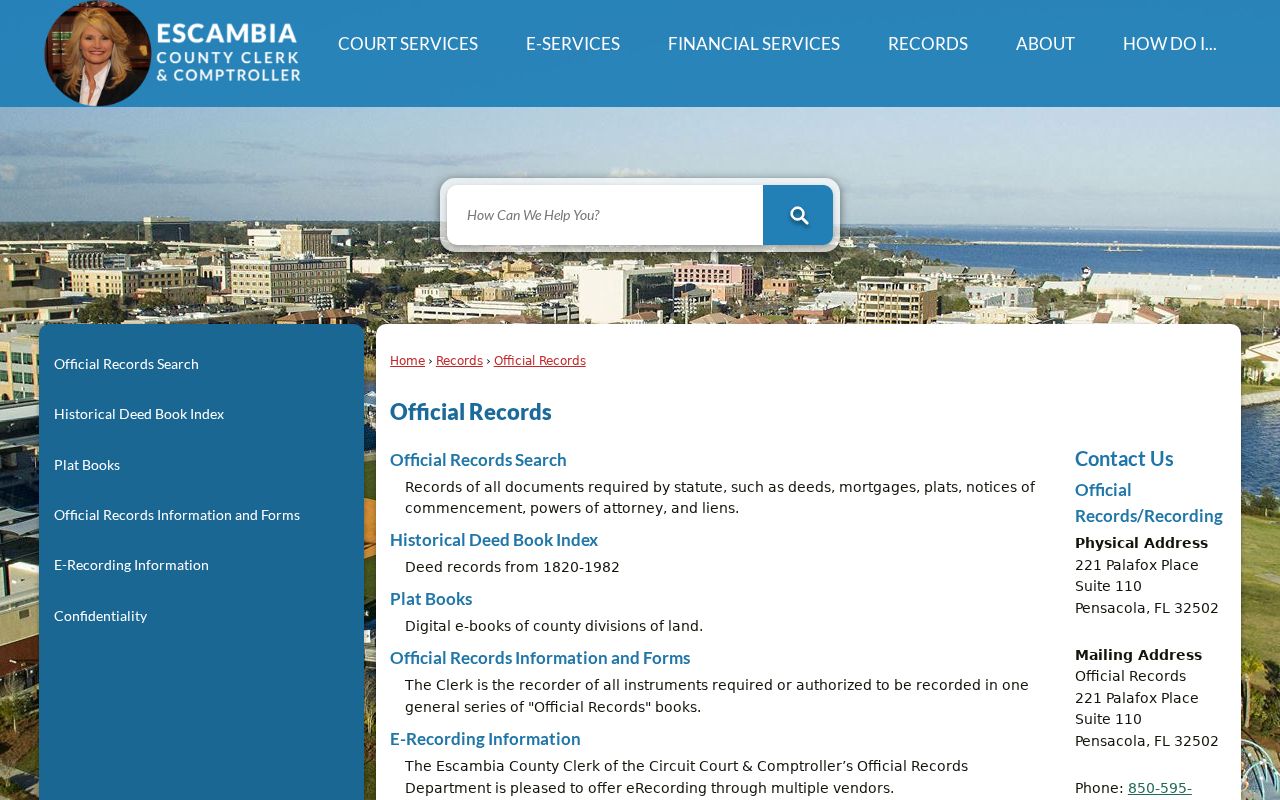
The source page also points to counter and records-center help when an online index or image is incomplete.
- Resolve the current address at ECPA. Save the Parcel ID, account, owner, legal description, and sale book/page.
- Open Landmark by book/page or search the current owner as grantee. Confirm the acquisition deed's legal description and dates.
- Take the seller, or grantor, and search that person as an earlier grantee. That prior purchase moves the chain back one step.
- Repeat with each seller. Search individual and corporation names when a company, trust, or estate appears.
- At the older range, switch to the 1820-1982 direct and indirect index books, then request the cited deed page if needed.
- Grantor and grantee
- The grantor gives or sells the interest; the grantee receives it.
- Chain of title
- The linked sequence of recorded transfers for the same property.
- Legal description
- The recorded land description, often based on subdivision, lot, block, or survey, which stays useful when a street label changes.
- Direct and indirect index
- The direct side is organized by grantor, while the indirect side is organized by grantee.
Pensacola's Split Historical Deed Index
The old Escambia browser divides its 1820-1982 run into direct and indirect books, then separates individuals from corporations. That structure can hide a transfer from a one-track search. An owner may have received title as a person and later transferred it through a company, trust, estate, or renamed entity. Search both sides and both entity groups.
Book and page references bridge the index to the deed image or clerk copy. Read the legal description in the deed, not only the index line. ECPA Sales Data is not a title abstract and may show selected sales rather than every legal event. Mortgages, corrective deeds, probate transfers, and boundary changes can complicate a clean seller-to-buyer sequence.
The Clerk's Public Records Center holds material that the modern portal does not replace, including an 1820 Spanish Census, an 1827 government survey, early civil records, nineteenth-century wills, and probate files. Office viewing and copy requests remain normal access channels for deep Pensacola history.
Date Pensacola Homes with Maps
A deed proves an interest in land, not that the same building stood there. Sanborn fire-insurance maps show footprint, construction, use, lot context, and street labels for several Pensacola dates. Compare sheets from 1884 through 1907 and the two 1951 sets. A footprint change can suggest demolition, an addition, or replacement, but the map still does not name an occupant.
ECPA GIS adds aerial layers from 2003, 2004, 2006, 2009, 2013, 2016, 2019, 2022, and 2025. Parcel history, easement lines, subdivision boundaries, dimensions, and aerial change help connect today's lot to the older map. Use the Parcel ID to join downloaded parcel data when a street number has shifted.
No official source confirmed one citywide street-renumbering year. Historic directories also use forms such as near, corner, and opposite, plus spellings like Zarragossa and Florida Blanca. Resolve each mismatch with directories, plats, Sanborn maps, and the parcel legal description rather than forcing a modern address onto an old page.
Link Pensacola Directories to Census
Deeds list owners. A city directory or census can show who lived there. Webb's 1885 book includes alphabetical, street, and business sections, and later telephone or cross directories reverse the question from address to listed occupant. WFPL and Hilton-Green hold physical directories whose exact shelf years are not posted, while UF-contributed scans cover verified early volumes.
The digitized Pensacola directory search provides the online starting set.
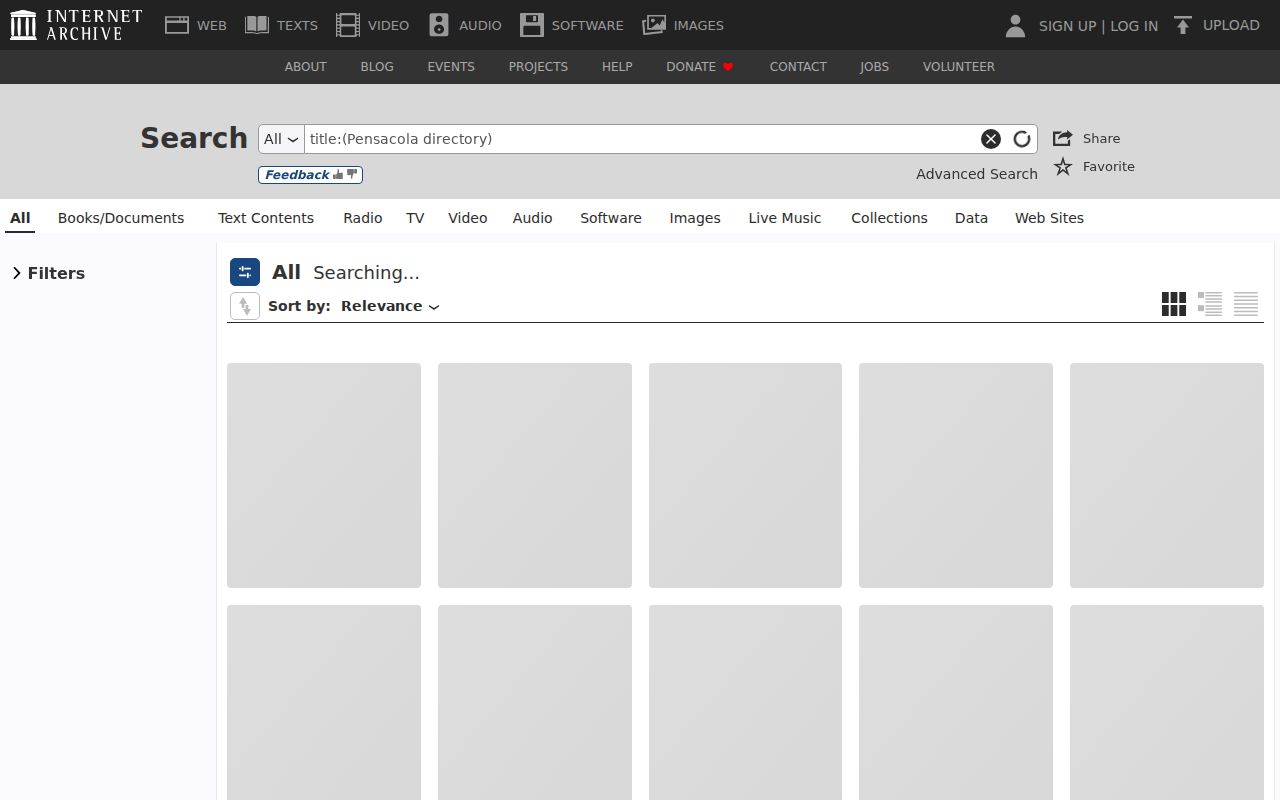
The scan search is useful for names, but OCR errors are common. Read the street section and abbreviation key, and try initials or alternate spellings. The full collection history is detailed on the Pensacola directory book page.
- Choose a directory year close to a public census year. Copy the listed name, trade, spouse or widow note, and address exactly.
- Use the street section to place nearby names and businesses. Mark the source year beside every finding.
- Find the household in the 1900, 1910, 1920, or later public census schedule. Check age, birth place, relationship, and occupation.
- Compare the directory before and after that census. A move or disappearance is a lead, not a conclusion.
- Confirm ownership and legal family roles through deeds, probate, or vital records.
Follow Pensacola Residents in Newspapers
WFPL newspaper holdings can place a person between directory and census years. Microfilm includes Pensacola Daily News and later Pensacola Journal from 1889 through 1919, Pensacola News Journal from 1954 through 2019, and several local papers from 1828 through 1846. Its database runs add Pensacola Journal from 1905 through 1985 and other News and News-Journal files.
Obituaries can name relatives, former addresses, funeral homes, churches, and burial places. Legal notices can identify probate, foreclosure, or a property dispute. Society pages, business notices, and naval news are useful in a city with frequent military movement. Treat each as a lead and confirm legal claims in the probate, deed, court, or vital record.
For a focused request, email genealogy@mywfpl.com with the person's full name, approximate date, Pensacola connection, and the source already checked. Staff and West Florida Genealogical Society volunteers assist with local work.
Close Pensacola Resident Trails
Probate, funeral-home, obituary, and cemetery sources often explain why a name stops appearing at an address. The Clerk's Public Records Center has probate material from 1883 through 1997 and old wills. WFPL holds Fisher-Pou Funeral Home records and the Hollingsworth card file. Those sources may add a date, kinship, burial place, or estate representative.
The Pensacola Area Cemetery Team documents restoration work at the co-located Magnolia and AME Zion cemeteries.
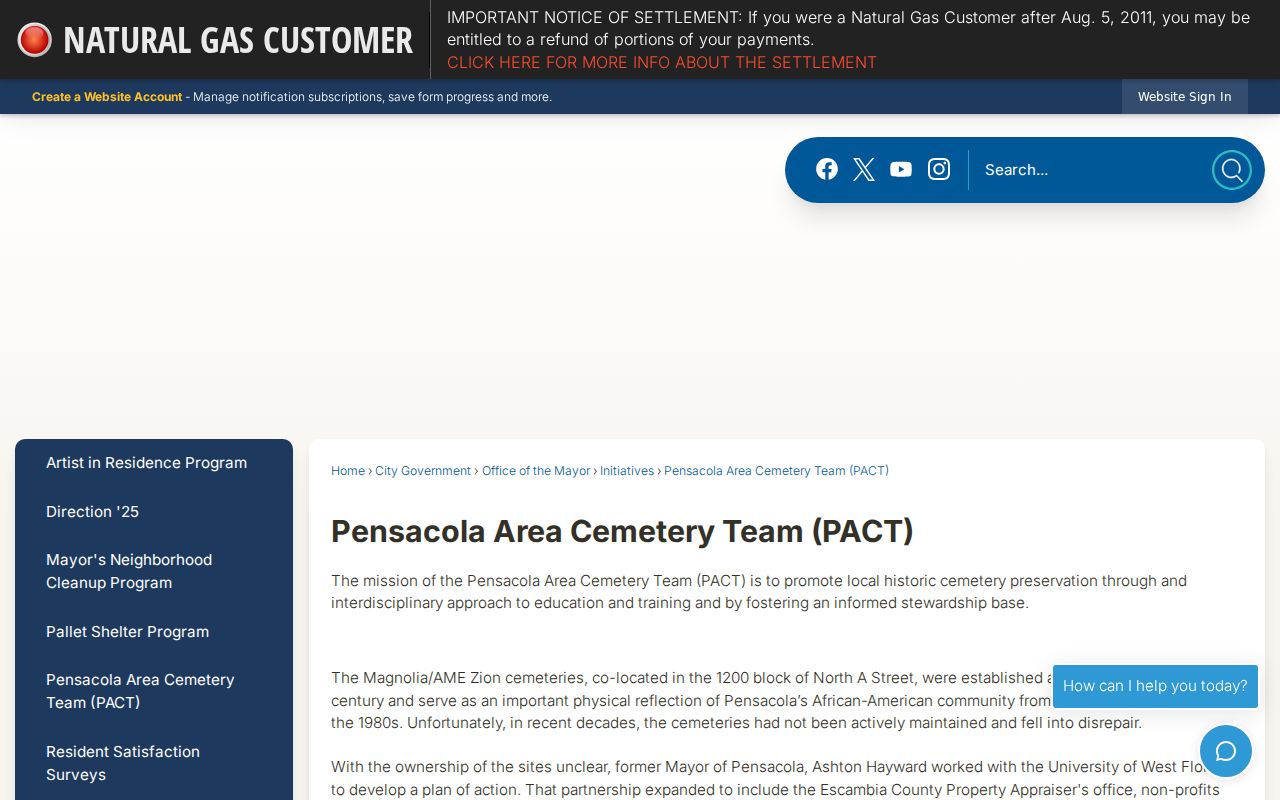
The site reflects a twentieth-century African-American community history that can require archives, archaeology, parcel evidence, and descendant knowledge together. It is not a citywide burial-name index. UWF Archaeology Institute is a research contact for that project.
Judge Pensacola Previous-Resident Gaps
Past households rarely form a perfect annual list. A person may not own the parcel, may board with another family, or may be omitted from a printed volume. A directory scan may be absent online, and OCR can miss the page that exists. Census schedules appear only at intervals. Protected or sealed records remain unavailable. State each gap instead of treating silence as proof that no one lived there.
Keep a simple timeline with separate columns for owner, listed occupant, structure, and source. This prevents a deed name from being mistaken for a resident and a map date from being mistaken for a move-in date. Use the modern Pensacola street search only to establish the current address and parcel context before moving backward.
Lawful use. Research previous residents for family, property, and local history, and never use a living person's record to track, harass, or cause harm.