
Pensacola Directory Runs and Repositories
Pensacola city directory research begins with a split collection. Early volumes have been scanned, while later local books, telephone books, and cross directories remain at reading rooms. The West Florida Public Libraries Genealogy Library confirms those physical formats but does not post a year-by-year shelf list. The Hilton-Green Research Room holds city directories dating to 1885 and telephone books. Before a visit, ask staff whether the exact year and format needed are present.
| Pensacola collection | Verified dates | Keeper | How to use it |
|---|---|---|---|
| Webb directories | 1885, 1887, 1890 | UF scans at Internet Archive | Free page images, OCR, and downloads |
| Pensacola and Maloney volumes | 1896 and 1898 metadata | UF scans at Internet Archive | Free online; verify the title leaf |
| Wiggins directory | Identifier says 1903; metadata says 1893 | UF scan at Internet Archive | Inspect the volume before citing its year |
| R.L. Polk series | 1905 through 1921-22, with online gaps | UF scans at Internet Archive | Free online issues |
| City, telephone, and cross directories | Exact shelf run not posted | WFPL and Hilton-Green | Contact or visit the reading room |
The scanned series has no verified issues for 1906, 1912, 1914-15, or 1917-18. That is an online gap, not proof that no book was printed. A catalog date can also be wrong. Pensacola researchers should inspect the title page, publication statement, and page images before assigning a year. Physical shelf checks and staff questions are part of the search, not a last resort.
Pensacola's First City Directory
Wanton S. Webb described the April 1885 book as the first directory issued in Pensacola. It offered more than an alphabetical name list. A street directory begins near page 18, the alphabetical entries near page 33, and a business directory near page 125. Lists of officers, churches, clubs, schools, societies, and institutions add civic context. A person can therefore be approached by surname, by place, or by an organization tied to daily life.
The Webb 1885 scan is free to read and download. The capture below shows the digitized source used to inspect the volume.
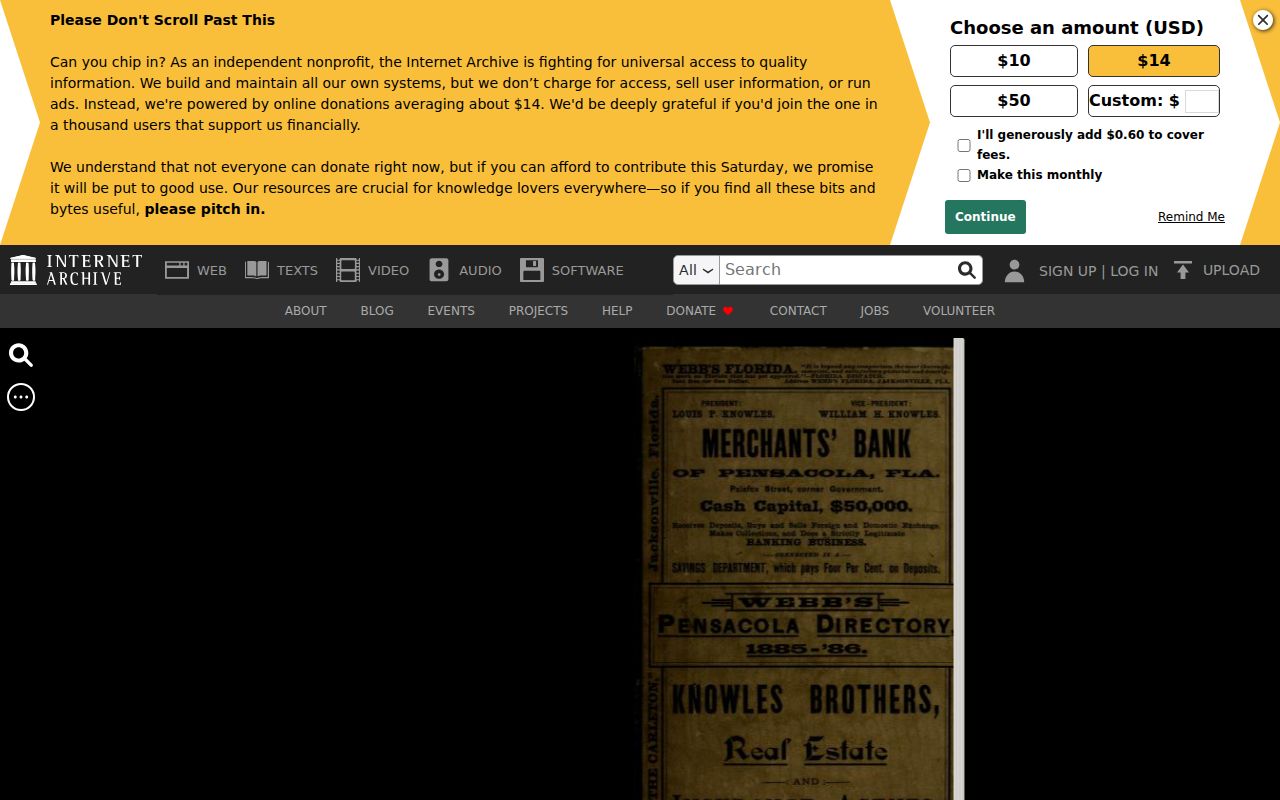
OCR can find a name quickly, but old type and unusual street spellings create missed results. Check the printed alphabetical pages even when text search returns nothing.
Pensacola Directory Books Online
Digitized city directories let a family researcher move between years without travel. The Internet Archive Pensacola directory search brings together the UF-contributed scans. The 1896 Pensacola directory and the R.L. Polk run sit beside the Webb volumes. Each item page may offer a page viewer, OCR text, and several download formats.
The 1896 directory scan provides a direct look at one of the transition-era books.
Search surname variants, initials, and historic spellings. Then read several pages around the hit. Nearby entries may distinguish relatives with the same name, and display ads can identify a firm that appears in an abbreviated entry.
The Wiggins Pensacola scan illustrates why the item itself matters more than catalog shorthand.
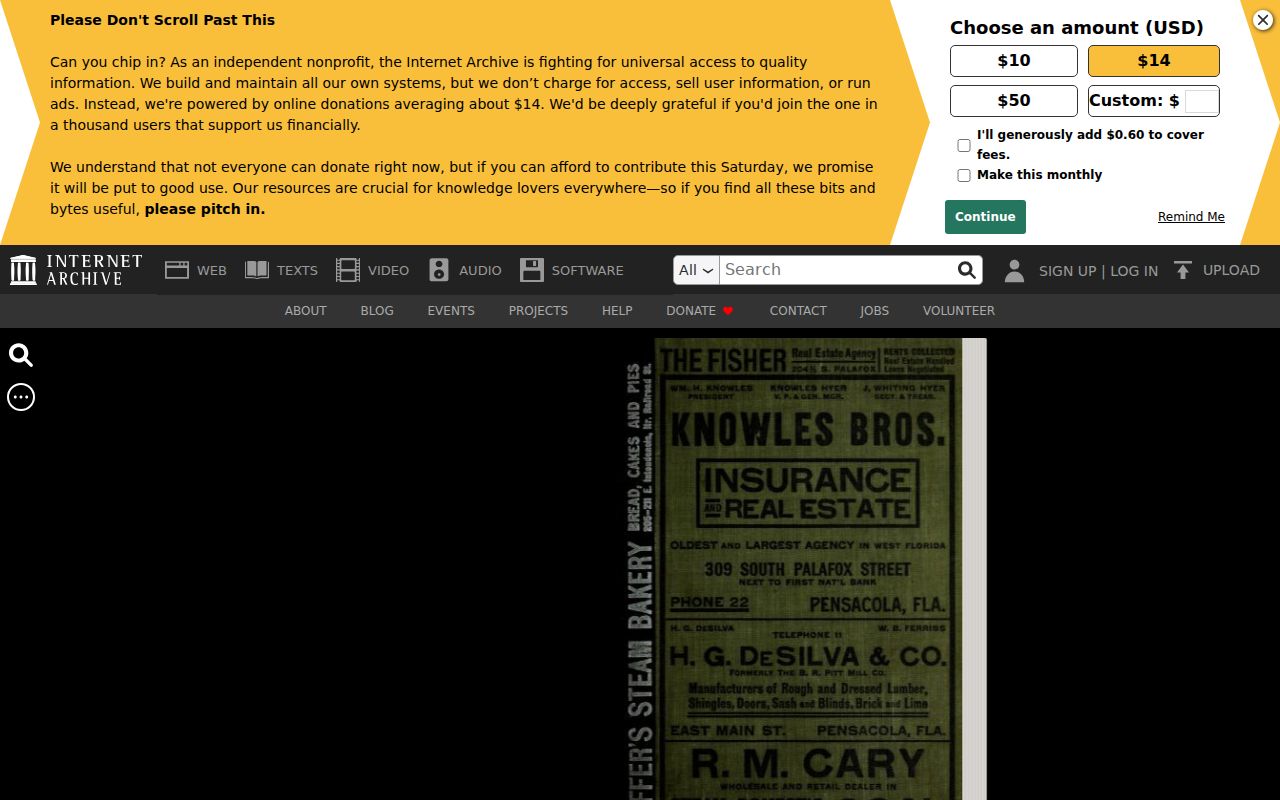
Its identifier and metadata conflict on the year. Cite the date printed inside the book, and note any uncertainty when the title leaf cannot be read.
Decode a Pensacola Directory Entry
A Webb entry can compress a life into one line. It may give surname, given name, trade, employer, business place, home location, and a boarding note. Widows may be identified by a spouse's name. Addresses can be relational, such as near, corner, or opposite, rather than a modern number. Occupation and employer often separate two people who share a name.
| Name | Surname and given name, sometimes initials or widow notation |
|---|---|
| Work | Trade, firm, partnership, or business location |
| Home | Street, intersection, boarding place, or relational phrase |
| Context | Church, school, society, office, or business-list appearance |
| Period marker | An asterisk used by the publisher as a segregation-era racial label |
The racial asterisk is evidence of the publisher's era and bias. It is not neutral language and should never be used as a present-day identity label. Preserve it only when needed to explain how an index was structured and why a person may appear in a separate pattern.
- Criss-cross directory
- A later directory arranged by street or phone number, useful when the address is known but the occupant's name is not.
- Householder index
- A list organized around the person tied to a home rather than every person who may have lived there.
- Abbreviation key
- The publisher's legend for short forms such as b for boards, h for house, c for corner, n for near, and opp for opposite.
Pensacola Directory Help at WFPL
The Genealogy Library is inside Pensacola Library at 239 N. Spring Street. Its noncirculating collection includes city directories, telephone and cross directories, maps, clipping files, census resources, and local newspaper microfilm. Staff and West Florida Genealogical Society volunteers can help. Specific local or obituary requests go to genealogy@mywfpl.com with a clear name, place, date range, background, and contact details.
The WFPL genealogy collection page also lists research databases and local microfilm.
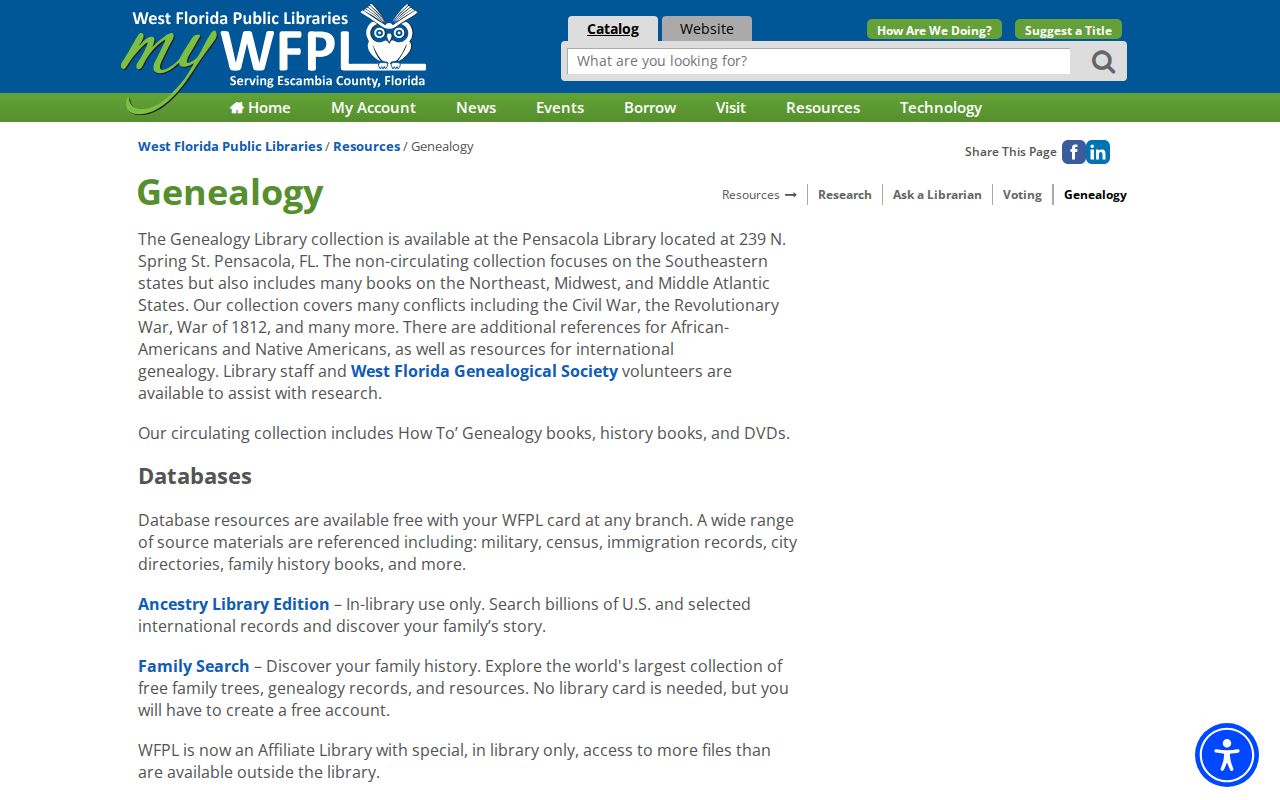
Onsite access can matter. Ancestry Library Edition is in-library only. WFPL is a FamilySearch Affiliate Library, so some locked images may open after a researcher signs in on the premises. HeritageQuest adds census, books, directories, military sources, and Freedman's Bank records.
Pensacola Records Beyond the Shelf
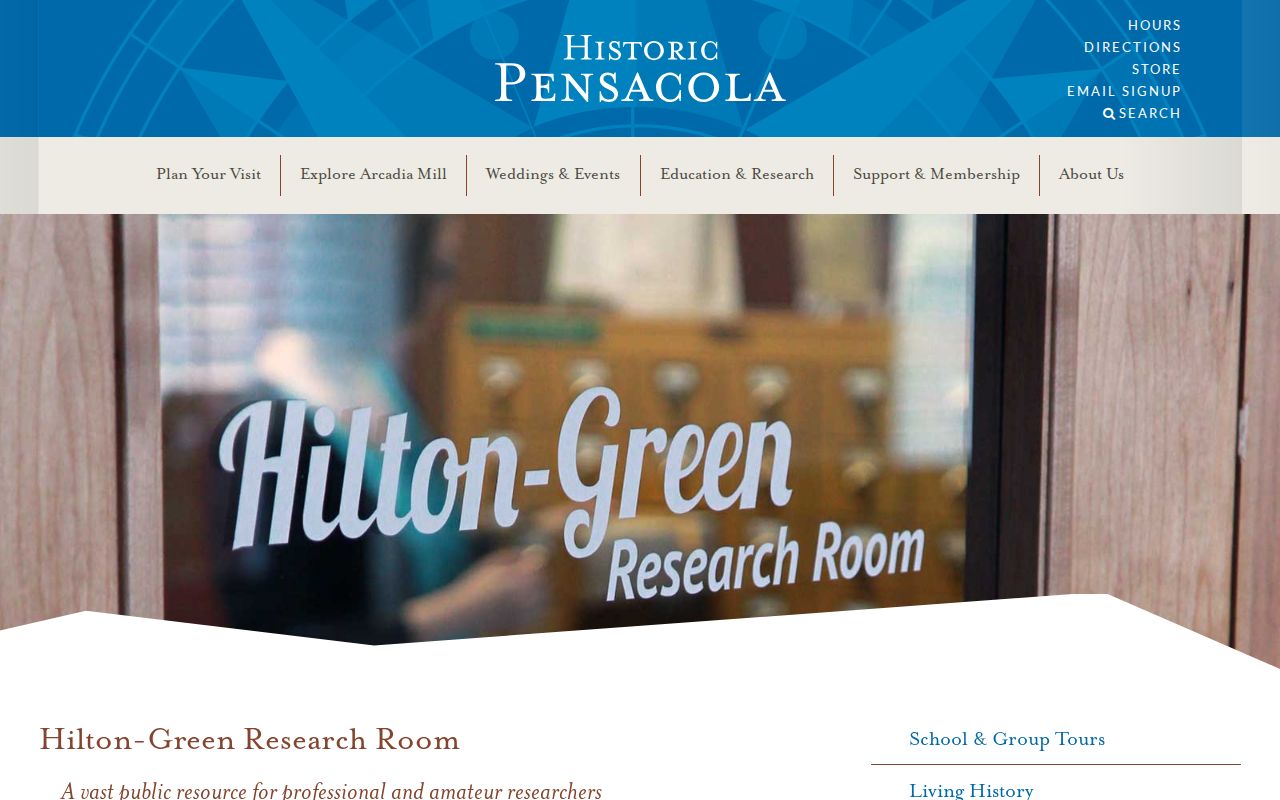
Two local archives add evidence that a city directory cannot hold. The Hilton-Green Research Room has more than 100,000 images, street and residence views, portraits, telephone books, cemetery records, Spanish Land Grants, Sanborn maps, family papers, and rare Northwest Florida books. It is at 117 E. Government Street and opens Tuesday through Friday, 10 a.m. to 4 p.m., by appointment and topic form. Fees can apply, and reading-room rules bar personal cameras and electronics, so discuss copies in advance.
The Hilton-Green access page explains its holdings and appointment process.
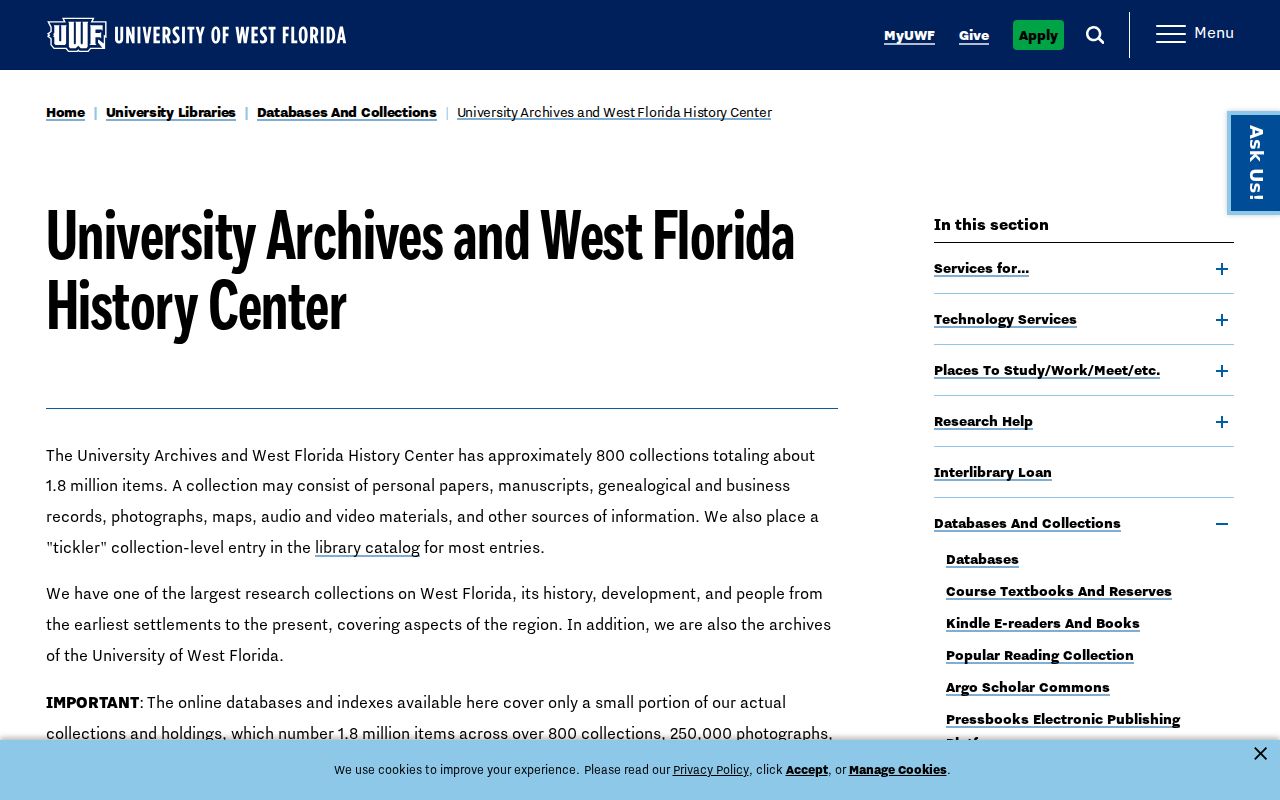
UWF's West Florida History Center serves a different scale: about 800 collections, 1.8 million items, 250,000 photographs, and 6,000 maps. Only part of the described holdings appears online. Reference staff can search names, subjects, maps, and photo groups that a web finding aid misses.
The UWF archive overview is the starting point for those collections.
The Bell studio photographs from 1911 through 1949 may support a family, wedding, visitor, or business identification. The Trader Jon collection adds a large naval-aviation record layer in a city shaped by military movement.
Map Pensacola Directory Addresses
Webb used spellings such as Zarragossa, Tarragona, Intendencia, Florida Blanca, and De Villiers. Entries can describe a site as near a railroad, opposite a landmark, or at a corner. No verified single citywide renumbering year was found. Treat each address change as its own research problem. Compare the entry with a same-era Sanborn sheet, plat, and legal description.
Library of Congress Sanborn editions cover 1884, 1887, 1892, 1897, 1903, 1907, and two 1951 sets. They show building footprint, use, construction, and street context, but not occupants. Newspapers then fill dates between volumes. WFPL microfilm includes Pensacola Daily News and Pensacola Journal from 1889 through 1919, Pensacola News Journal from 1954 through 2019, and several local papers from 1828 through 1846. Those papers can supply obituaries, business notices, naval news, society notes, and legal ads.
Trace Family in Pensacola Directories
A city directory gives a yearly point, not a full life story. Pair name, work, and address before deciding that two entries refer to one person. Federal census schedules are public through 1950 under the 72-year rule. The 1900, 1910, and 1920 schedules can fill household details between the early printed runs, while deeds, probate, funeral-home files, and vital records confirm legal relationships.
- Find the surname in the alphabetical section. Copy the full entry, including initials, trade, firm, spouse or widow note, and exact address wording.
- Check the street section in the same volume. Record nearby names and businesses that help fix the location.
- Compare the prior and next available city directory. Note moves, changes in work, and any disappearance without assuming what caused it.
- Pair the address with a census year and a Sanborn map. Use historic spelling and the publisher's abbreviation key.
- Confirm death, inheritance, or ownership clues in newspapers, probate, cemetery material, and deeds.
A missing name may mean a move, death, nonpublication, OCR failure, or an unlisted household. For a modern address-keyed search, use the Pensacola street directory workflow. The city directory evidence remains tied to its date and should be cited that way.
Pensacola Directory Custody Timeline
Directory books survived through several publishers and custodians. That history explains why no single catalog contains the full local record.
| 1885 | Webb issued what its preface called Pensacola's first directory. |
|---|---|
| 1890s | Webb, Pensacola Directory, and Maloney issues mark publisher turnover. |
| 1903-1922 | Wiggins and R.L. Polk volumes continue the digitized sequence, with gaps. |
| 2001-2013 | Historic holdings moved to UWF, merged with Pensacola Historical Society material, and became part of the UWF Historic Trust. |
| 2025 | UWF transcription work began improving discovery in handwritten letters and ship logs. |
New transcription and catalog work can create fresh name hits without creating new records. Repeat an archive search later, but verify any result against the scanned page, title leaf, or original file.